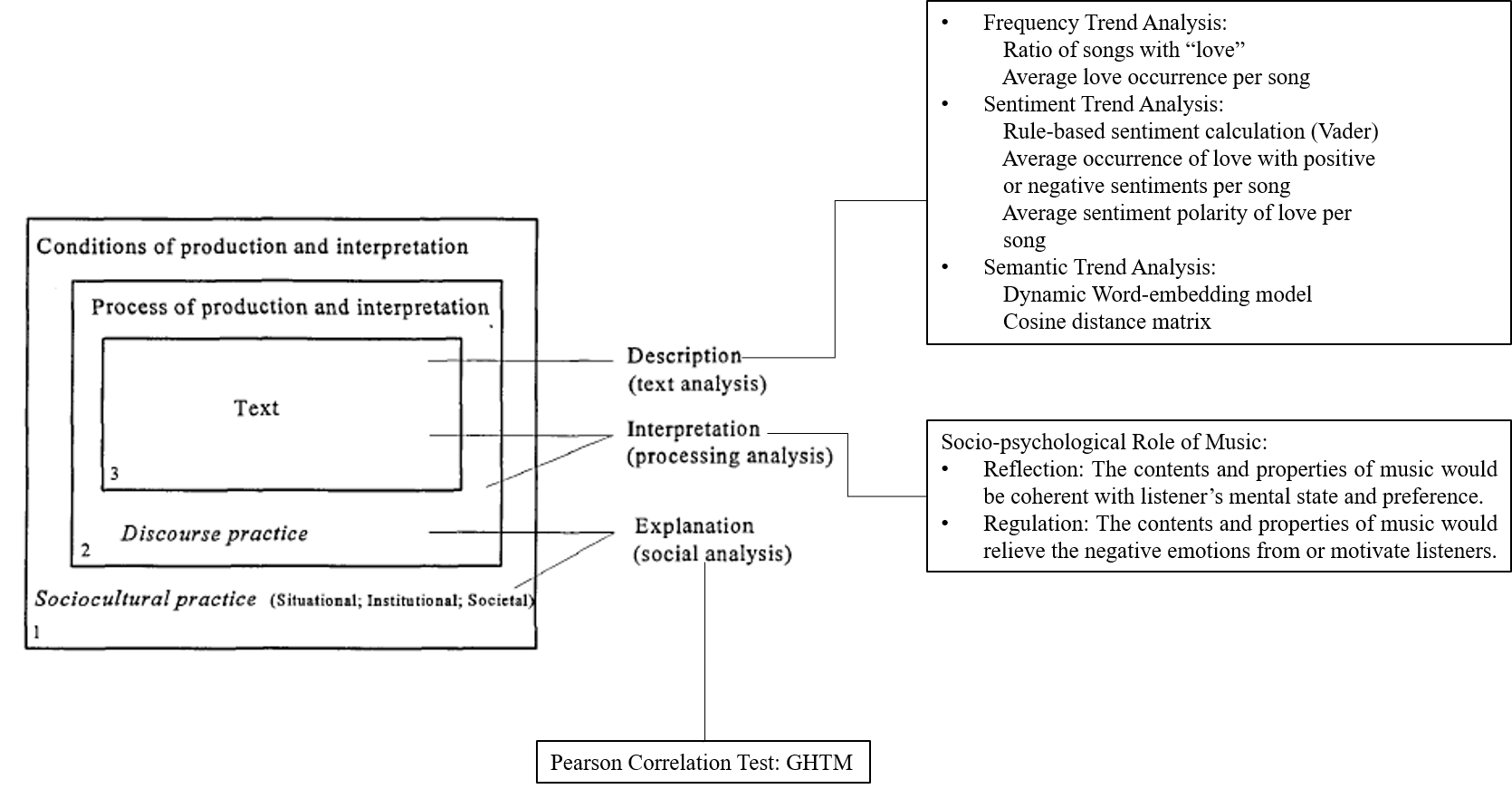
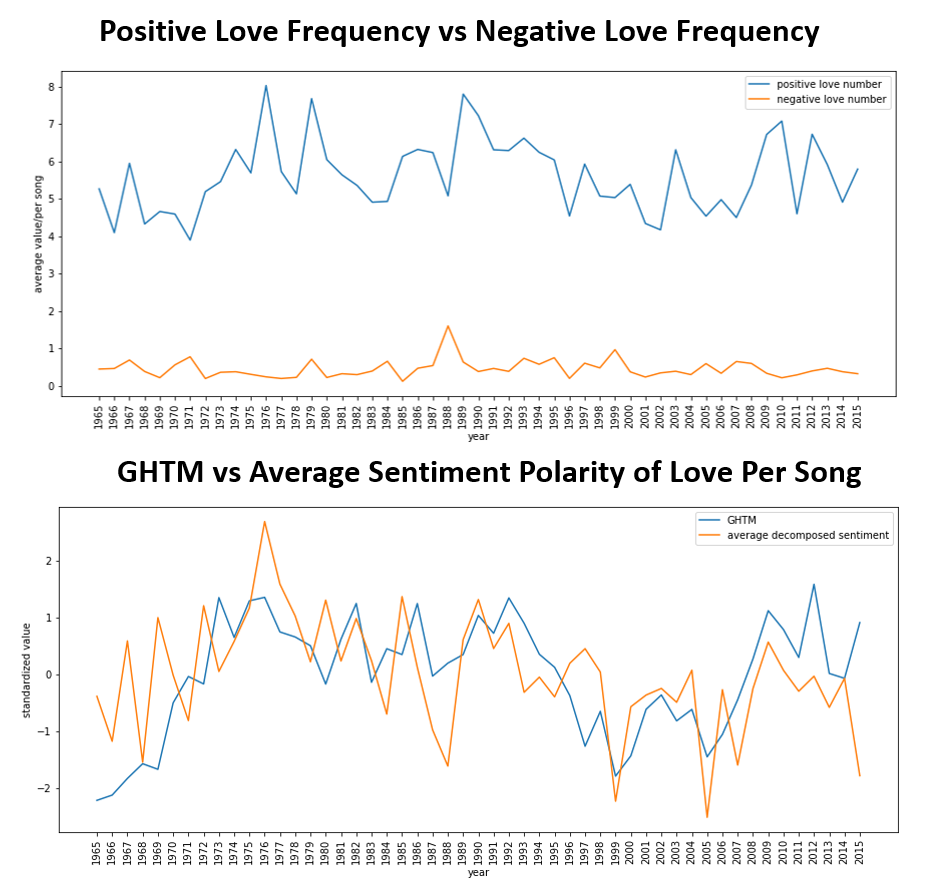
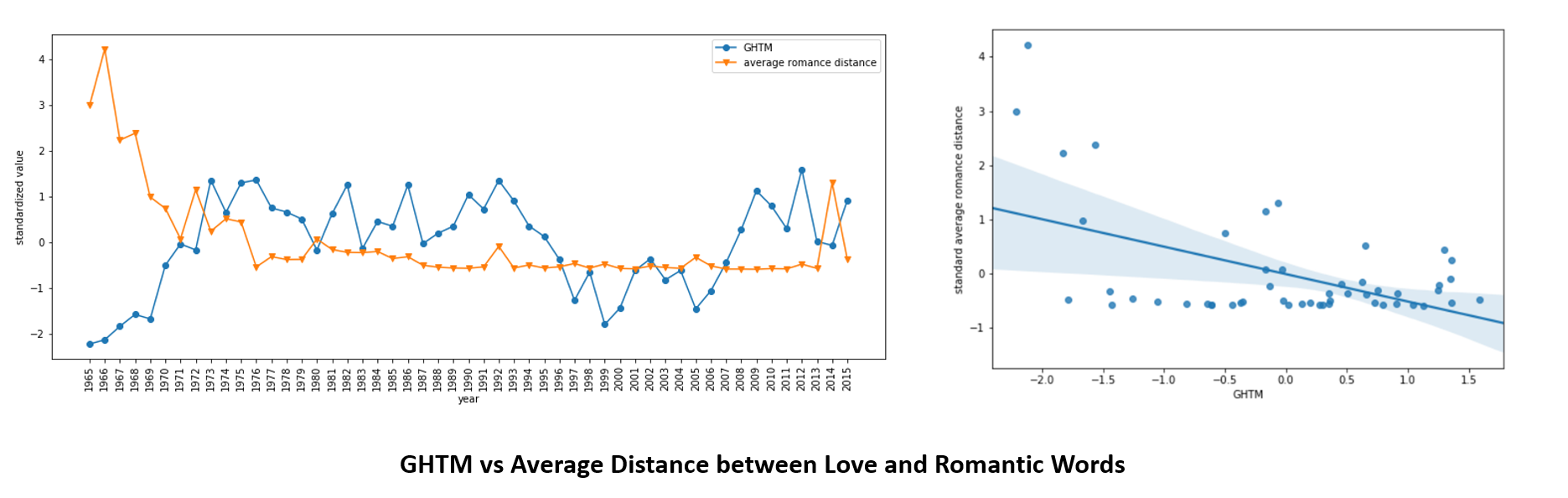
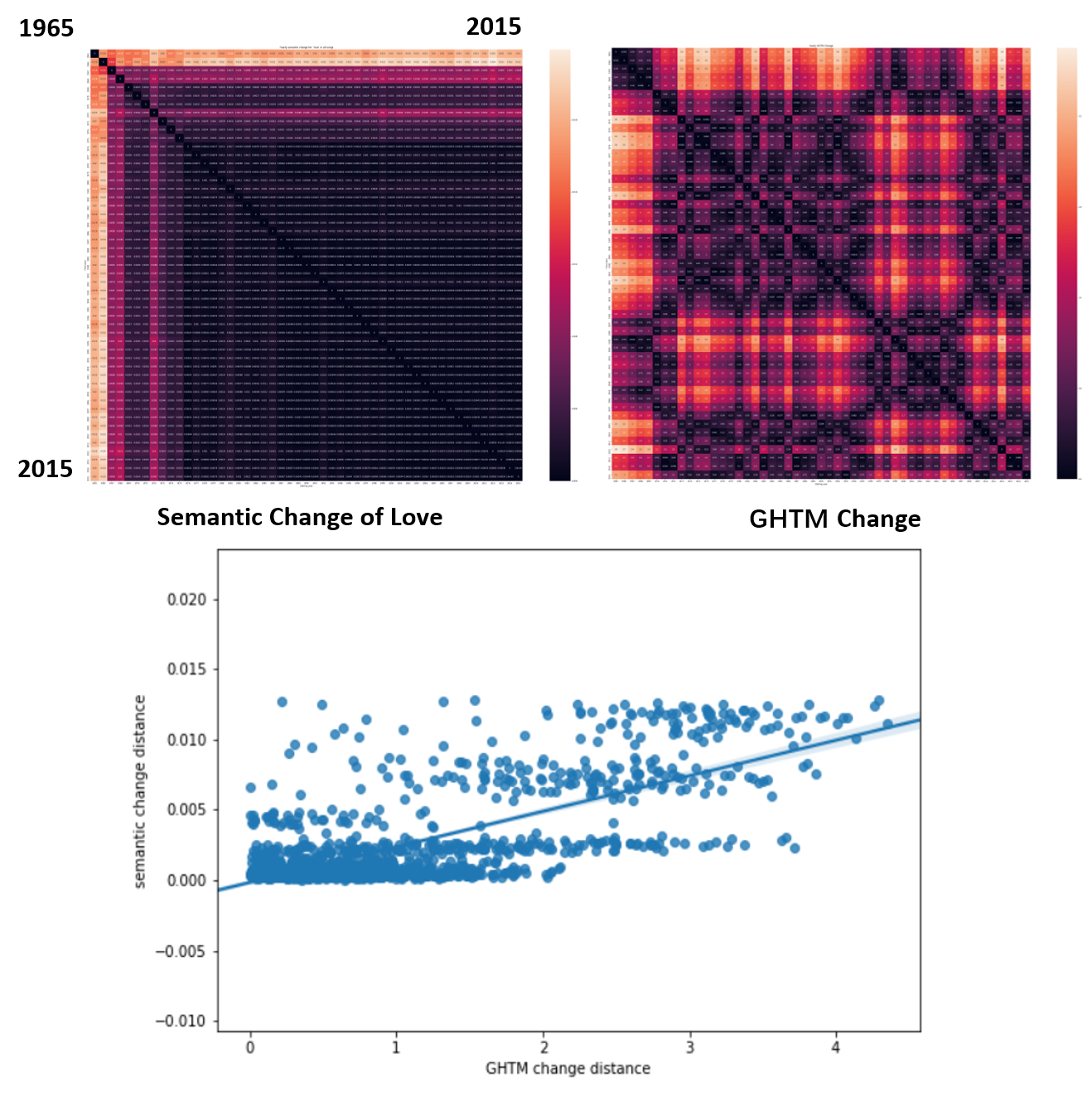
Media studies suggest that cultural products, like music, could mediate the relationship between the internal and the external world of the audiences. They may serve as reflections echoing listeners’ thoughts and feelings or as regulatory tools to relieve the listeners from negative emotions, especially when they are having a hard time. Macro-level patterns about such socio-psychological functions have been found in Billboard songs, but whether they exist in micro-cultural expressions remains unknown. This research examines the socio-psychological role of a specific cultural sign, love, in Billboard Hot 100 songs from 1965 to 2015. Combining Fairclough’s framework in critical discourse analysis with rule-based sentiment analysis and dynamic word embedding, this study indicates a regulatory role of “love” from three perspectives: word frequency, associated sentiment, and semantic change. Results show that under worse socio-economic conditions, the word love tends to occur more frequently, have more positive sentiment association, and contain more romantic semantics. Additionally, the semantic distances between the embeddings of “love” in different years correlate to corresponding differences between the overall socio-economic indicators. These trends support the Environmental Security Hypothesis (regulatory function) that cultural products could placate or encourage people who are suffering from external hardships.

 Yutao Chen